Your Rights Under the Muslim Women (Protection of Rights on Marriage) Act, 2019
- May 2
- 7 min read
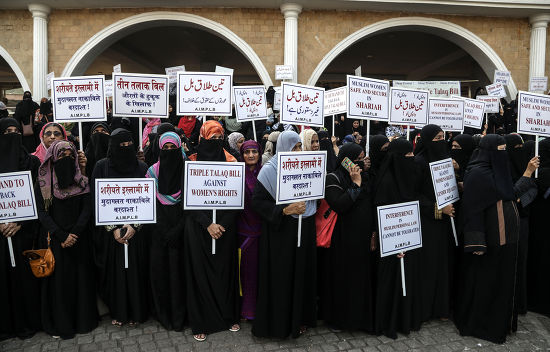
Introduction: A Law That Changed Everything
Imagine waking up one morning to a text message or a phone call — and being told your marriage is over. Just like that. Three words, and your life is turned upside down.
This was the harsh reality for thousands of Muslim women in India who faced instant Triple Talaq (also called Talaq-e-Biddat) — a practice where a husband could end a marriage by saying or writing the word "talaq" three times in one go.
In August 2019, the Indian Parliament said: Enough.
The Muslim Women (Protection of Rights on Marriage) Act, 2019 was passed to protect Muslim women from this practice. This law is a landmark step for gender justice in India, and every Muslim woman — and her family — should know what it means for them.
Let's break it down in simple, plain language.
What Is Triple Talaq? And Why Was It Banned?
Understanding Triple Talaq
In Islamic law, there are different forms of divorce (talaq). The most widely accepted and Quran-compliant forms involve a waiting period (iddah), counselling, and a chance for reconciliation.
Talaq-e-Biddat — or instant Triple Talaq — is different. In this practice, a husband pronounces "talaq" three times in one sitting, and the marriage is considered dissolved immediately. No waiting period. No discussion. No consent from the wife.
This practice has been:
Declared un-Islamic by many Muslim-majority countries including Pakistan, Bangladesh, Turkey, Egypt, and Saudi Arabia.
Used to abandon women with no warning, no support, and no legal recourse.
Delivered via text messages, WhatsApp, email, or even phone calls.
What the Supreme Court Said
In August 2017, the Supreme Court of India in the landmark case Shayara Bano vs. Union of India declared instant Triple Talaq unconstitutional — saying it violated the fundamental rights of Muslim women under Articles 14 (Right to Equality) and 21 (Right to Life and Personal Liberty) of the Indian Constitution.
Following this judgment, the Parliament enacted the Muslim Women (Protection of Rights on Marriage) Act, 2019 to give this protection the force of criminal law.
What Does the 2019 Act Say? (In Plain Language)
1. Instant Triple Talaq Is Now Illegal
Under Section 3 of the Act, any declaration of instant Triple Talaq — whether spoken, written, or sent through electronic means (WhatsApp, SMS, email, etc.) — is void and illegal.
This means:
The divorce does not take effect.
The marriage is still valid in the eyes of the law.
The husband cannot simply claim the marriage is over.
2. It Is a Criminal Offence
This is a key point that makes this law powerful.
Under Section 4, a husband who pronounces instant Triple Talaq can be arrested and sentenced to imprisonment of up to 3 years, along with a fine.
This is not just a civil matter — it is a criminal offence. The State takes it seriously.
3. It Is a Cognizable Offence
The offence under this Act is cognizable, which means:
The police can arrest the husband without a warrant.
They do not need prior approval from a magistrate to investigate.
This makes it easier and faster for a woman to get immediate protection.
4. Who Can File a Complaint?
Under Section 10, a complaint can be filed by:
The wife herself.
Her blood relatives (parents, siblings, etc.).
Her in-laws who are related by marriage.
This is important because in many cases, a woman may be under pressure, fear, or financial dependence. Having family members who can file on her behalf adds a safety net.
5. The Magistrate Can Grant Bail — But Only With the Wife's Consent
One of the most thoughtful provisions of this law is around bail.
Under Section 7, the husband can apply for bail (anticipatory bail) before being arrested. However, the Magistrate must give the wife an opportunity to be heard before deciding on bail.
This prevents a situation where the husband is released without the wife even being consulted, which could put her in a dangerous or vulnerable position.
6. Right to Maintenance
Under Section 5, the wife is entitled to maintenance (financial support) from her husband for herself and her dependent children.
The amount is decided by a Magistrate based on the circumstances of the case. This ensures she is not left without any financial support while the matter is in court.
7. Right to Custody of Minor Children
Under Section 6, the wife has the right to custody of her minor children.
If there is a dispute, the Magistrate will decide based on what is in the best interest of the child.
Summary of Your Key Rights at a Glance
Your Right | What It Means |
Instant Triple Talaq is void | The divorce has no legal effect. Your marriage is intact. |
Criminal protection | Your husband can be arrested and jailed up to 3 years. |
Right to file a complaint | You or your family can go to the police directly. |
Right to be heard on bail | Police/court must consult you before releasing your husband on bail. |
Right to maintenance | You can claim financial support for yourself and your children. |
Right to child custody | You can seek custody of your minor children through a Magistrate. |
How to File a Complaint: Step-by-Step
If you or someone you know has been subjected to instant Triple Talaq, here is what you can do:
Step 1: Go to the nearest police station. Since the offence is cognizable, you can directly approach any police station and file an FIR (First Information Report). You do not need a lawyer to do this.
Step 2: Tell the police clearly what happened. Explain how the talaq was pronounced — whether it was verbal, written, or through a message. If it was sent digitally (WhatsApp, SMS), keep the screenshots or recordings as evidence.
Step 3: The police must register your complaint. Under the law, the police are obligated to act on your complaint. If a police officer refuses to file your FIR, you can approach a senior officer or go directly to a Judicial Magistrate.
Step 4: Apply to a Magistrate for maintenance and child custody if needed. Along with the criminal complaint, you can simultaneously approach a Magistrate to seek interim maintenance (financial support) and custody of your children.
Step 5: Get legal aid if you cannot afford a lawyer. Under the Legal Services Authorities Act, you are entitled to free legal aid. Contact your District Legal Services Authority (DLSA) for help.
Common Questions Answered
Q: What if the Triple Talaq was given verbally in front of witnesses — is it still illegal? Yes. The law does not distinguish between verbal, written, or electronic modes. Any form of instant Triple Talaq is illegal under the Act.
Q: Does the law apply to all Muslim women in India, regardless of which sect they follow? Yes. The Act applies to all Muslim women who are married under Muslim personal law in India.
Q: My husband gave Triple Talaq but now says he didn't mean it. What happens? Since the marriage is still legally valid (the talaq has no effect), both of you remain legally married. However, the criminal complaint you filed can still proceed.
Q: Can the case be settled between us without going to court? Under Section 7(3) of the Act, the offence can be compounded (settled out of court) — but only at the request of the wife, on terms and conditions she decides. No one can force you to settle.
Q: Can I be pressured to withdraw the complaint? No one — not your in-laws, not community leaders, not even your husband — can legally force you to withdraw your complaint. Any such pressure could itself be grounds for another complaint.
What This Law Doesn't Cover
It's important to be clear about the scope of this law:
It applies only to instant Triple Talaq (Talaq-e-Biddat) — not to other forms of Islamic divorce that are conducted in a gradual, procedural manner.
It does not govern all aspects of Muslim personal law such as inheritance, mehr (dower), or other types of divorce.
It does not replace other laws like the Protection of Women from Domestic Violence Act, 2005, or the Indian Penal Code, which may also apply in cases of abuse or harassment.
You can use multiple laws together if you are facing abuse, harassment, or abandonment.
Other Laws That Protect You
You are not alone — there are several other laws you can use alongside the 2019 Act:
1. Protection of Women from Domestic Violence Act, 2005 Protects against physical, emotional, economic, and sexual abuse. You can apply for a protection order, residence order, and monetary relief.
2. Section 498A of the Indian Penal Code (IPC) Makes cruelty by a husband or his relatives a criminal offence punishable with imprisonment.
3. The Muslim Women (Protection of Rights on Divorce) Act, 1986 Provides for maintenance and financial support for divorced Muslim women during the iddah period and beyond.
4. Right to Education for Children Your children's right to education cannot be taken away, regardless of the marital status of the parents.
Where to Get Help
If you need legal help or advice, reach out to:
Your nearest District Legal Services Authority (DLSA): Free legal aid for women.
National Commission for Women (NCW): Helpline: 7827170170
Women's Helpline: Dial 181 (available 24/7 in most states)
Police Emergency: Dial 100 or 112
Majlis Manch, Mumbai / Bebaak Collective / Bharatiya Muslim Mahila Andolan (BMMA): NGOs that specifically support Muslim women on legal matters.
Final Thoughts
The Muslim Women (Protection of Rights on Marriage) Act, 2019 is not just a piece of legislation. For millions of Indian Muslim women, it is a statement that their dignity, security, and futures matter — that they cannot be discarded with a word.
Knowing your rights is the first step to protecting them. You are entitled to a life free from fear of sudden abandonment. You are entitled to financial support. You are entitled to your children. And you are entitled to justice.
If you or someone you know is facing this situation — speak up, reach out, and know that the law is on your side.


Comments