How to Report Human Trafficking Cases
- May 29
- 6 min read
Introduction
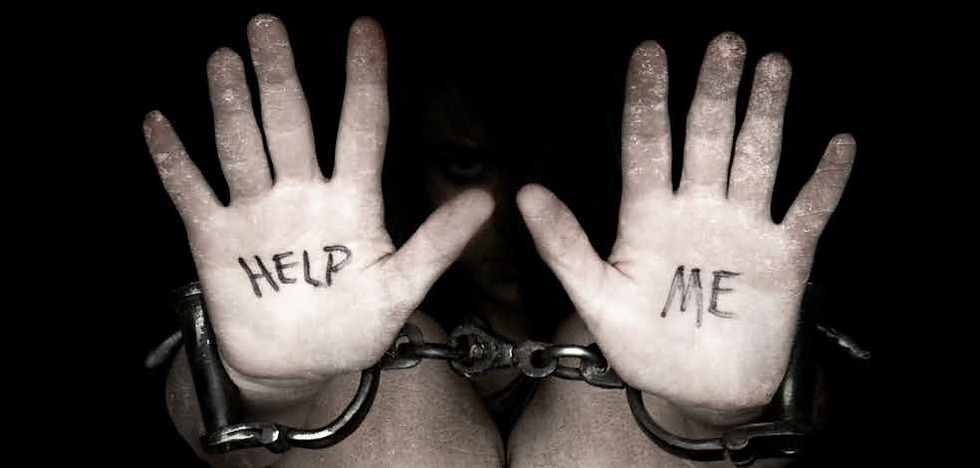
Human trafficking is one of the most serious crimes happening across India today. It involves forcing, deceiving, or threatening people — often women and children — into exploitation. This could be forced labour, sexual exploitation, domestic servitude, or organ trafficking.
The sad reality is that many cases go unreported — either because people don't recognise the signs, don't know where to report, or are afraid to come forward.
If you ever suspect someone is being trafficked, your one phone call or one report can save a life.
This guide is written in simple language to help every Indian citizen understand how to report human trafficking safely and effectively.
What Is Human Trafficking? (In Simple Words)
Human trafficking means treating people like a commodity — buying, selling, transporting, or exploiting them against their will. It is not just a problem of big cities; it happens in villages, factories, farms, and even inside homes.
Common forms of trafficking in India include:
Bonded/Forced Labour — Workers trapped in factories, farms, or brick kilns through debt
Child Labour — Children being made to work instead of going to school
Sexual Exploitation — Women and girls forced into prostitution
Domestic Servitude — People made to work as unpaid servants in homes
Begging Rackets — Children and adults forced to beg on streets
Organ Trafficking — Luring vulnerable people to sell organs
Know the Warning Signs
Before reporting, it helps to recognise the signs. Here is what to look out for:
Signs in a Person:
Looks fearful, anxious, or avoids eye contact
Has signs of physical abuse, malnourishment, or exhaustion
Does not speak for themselves — someone always speaks on their behalf
Not allowed to move freely or go out alone
Doesn't know their own address or location
Wears clothes unsuitable for the weather
Signs in a Location:
A house or building with unusually high foot traffic at odd hours
Children found working in hotels, dhabas, construction sites, or homes instead of being in school
Migrant workers living in locked or overcrowded spaces
In Online Spaces:
Job advertisements that promise very high salaries for low-skilled work
Offers of modelling, film or dance work from unknown sources
Requests to share personal documents like Aadhaar or passport for a "job"
Laws That Protect Victims in India
India has strong laws against trafficking. Knowing them helps you understand how serious the crime is:
Law | What It Covers |
IPC Section 370 & 370A | Trafficking of persons, including for labour and sexual exploitation |
Immoral Traffic (Prevention) Act (ITPA), 1956 | Covers prostitution and sexual exploitation |
POCSO Act, 2012 | Protects children from sexual offences including trafficking |
Bonded Labour System (Abolition) Act, 1976 | Prohibits forced and bonded labour |
Child Labour (Prohibition and Regulation) Act, 1986 | Bans employment of children in hazardous work |
Juvenile Justice Act, 2015 | Protects children in difficult circumstances |
Note: In 2023, the Trafficking in Persons (Prevention, Care and Rehabilitation) Bill was also introduced to strengthen the legal framework further.
Where and How to Report Human Trafficking in India
Here are all the ways you can report a trafficking case, step by step.
1. Call the National Helplines (Fastest Option)
These are free, 24/7 helplines you can call from any mobile or landline in India:
Helpline | Number | For |
Anti-Human Trafficking Helpline | 1800-419-8588 | All trafficking cases |
CHILDLINE | 1098 | Children in danger |
Women's Helpline (National) | 181 | Women in distress |
Police Emergency | 100 | Immediate danger |
Crime Stopper | 1090 | Anonymous tip-offs |
iCall (Mental Health Support) | 9152987821 | Trauma support for survivors |
Tip: If you fear for your own safety, call 100 first. You do not have to give your name.
2. File a Complaint at Your Local Police Station
You can go to the nearest police station and file an FIR (First Information Report). Here is how:
Step 1: Go to the police station in the area where you spotted the trafficking activity.
Step 2: Ask to speak to the officer in charge or the Anti-Human Trafficking Unit (AHTU) officer. Most districts in India now have a dedicated AHTU.
Step 3: Give a written or oral complaint. Mention:
What you saw or heard
Location and time
Description of the people involved
Any vehicle numbers, phone numbers, or names you noticed
Step 4: Ask for a copy of the FIR with the FIR number. This is your right under Indian law.
Important: If the local police refuse to register your complaint, you can approach the Superintendent of Police (SP) of the district or file a complaint with the State Human Rights Commission.
3. Report Online Through the iReport Portal
The Ministry of Home Affairs has a dedicated online portal for reporting trafficking and other crimes.
Portal: https://www.cybercrime.gov.in
Steps to report:
Visit the website
Click on "Report Other Cyber Crime" or the human trafficking category
Fill in the complaint form with as much detail as possible
Submit — you will receive an acknowledgement number
This portal is especially useful for reporting online trafficking, such as fake job advertisements, luring through social media, or online sexual exploitation of children.
4. Contact the National Human Rights Commission (NHRC)
If you feel the police are not acting or a victim's rights have been violated:
Website: https://nhrc.nic.in
Email: cr.nhrc@nic.in
Post: You can write a letter to NHRC, Manav Adhikar Bhawan, Block-C, GPO Complex, INA, New Delhi – 110023
5. Reach Out to NGOs and Civil Society Organisations
Many NGOs across India actively work to rescue and rehabilitate trafficking victims. They can also help you file a complaint safely:
Organisation | Contact / Website |
Bachpan Bachao Andolan (BBA) | bba.org.in — Run by Nobel laureate Kailash Satyarthi |
Prajwala (Hyderabad) | Works with sexually exploited survivors |
Apne Aap Women Worldwide | Works with vulnerable women and girls |
STOP (Students and Teachers Opposing Prejudice) | Awareness and reporting network |
Shakti Vahini | Tracks and reports trafficking networks |
These organisations often have rescue teams that can act faster than police in certain situations. They also offer safe shelter, legal help, and counselling for survivors.
6. Report to the Labour Department (for Bonded Labour Cases)
If you witness someone being forced to work without pay or in dangerous conditions:
Contact the District Labour Officer in your area
File a complaint under the Bonded Labour System (Abolition) Act
The District Magistrate (DM) is empowered to take suo motu action in bonded labour cases
What Happens After You Report?
Once a report is filed:
The police will investigate — They may visit the location and speak to witnesses
A rescue operation may be launched — Especially if children or multiple victims are involved
Victims are taken to a shelter — Under government-run Ujjawala Scheme shelters or NGO-run homes
Legal proceedings begin — The accused will be charged under relevant sections of the IPC and special laws
Rehabilitation support is given — Survivors get counselling, skill training, and help to reintegrate into society
How to Report Safely (Without Putting Yourself at Risk)
Your safety matters. Here are a few precautions:
You can report anonymously — Neither CHILDLINE (1098) nor Crime Stopper (1090) requires you to reveal your identity
Do not confront traffickers — This can be dangerous. Report and let authorities handle it
Don't photograph or video without care — It may alert the traffickers before help arrives
Use a trusted device — If you fear surveillance, use a phone or device not connected to your name
Reach out to an NGO first if you are unsure and need guidance before going to the police
Special Situations: What to Do
If the Victim Is a Child
Call CHILDLINE at 1098 immediately. They are trained to handle child trafficking with speed and sensitivity. You can also approach your local Child Welfare Committee (CWC).
If the Trafficking Is Happening Online
Report it on the National Cyber Crime Reporting Portal at cybercrime.gov.in. Online trafficking is a growing menace and this portal is specifically designed for such reports.
If You Are a Survivor
You have full legal protection. Go to any police station or NGO shelter and ask for help. You cannot be punished for being trafficked. Under the law, you are a victim, not a criminal.
If the Police Are Involved in Trafficking
This does happen in some cases. If you suspect police complicity, bypass local police and report directly to:
The Superintendent of Police (SP)
The State CID or Crime Branch
The NHRC
A trusted NGO
How You Can Spread Awareness
Reporting is not the only way you can help. Every Indian can contribute:
Talk about it — Have open conversations about trafficking with your family, especially children
Educate workers — If you employ domestic workers or daily wage labourers, make sure they are not bonded or exploited
Be a responsible traveller — Report suspicious activity at bus stations, railway stations, and highways
Support NGOs — Donate or volunteer with organisations working on this issue
Follow and share government campaigns — Like the "Samvedna" helpline and NHRC's awareness drives
Quick Reference: All Key Helplines and Portals
Resource | Details |
Anti-Trafficking Helpline | 1800-419-8588 (Free, 24/7) |
CHILDLINE | 1098 (Free, 24/7) |
Women's Helpline | 181 |
Police | 100 |
Crime Stopper | 1090 (Anonymous) |
National Cyber Crime Portal | |
NHRC | |
Bachpan Bachao Andolan | |
Shakti Vahini |
Conclusion
Human trafficking thrives in silence. When we speak up, we break the chain.
You don't need to be a social worker or a police officer to make a difference. As a citizen, one phone call, one online report, or one conversation with a neighbour could be the difference between a life lost to exploitation and a life restored to dignity.
India has the laws. India has the helplines. What it needs is more people willing to use them.
If you ever see something suspicious, don't look away. Report it. Save a life.


Comments